
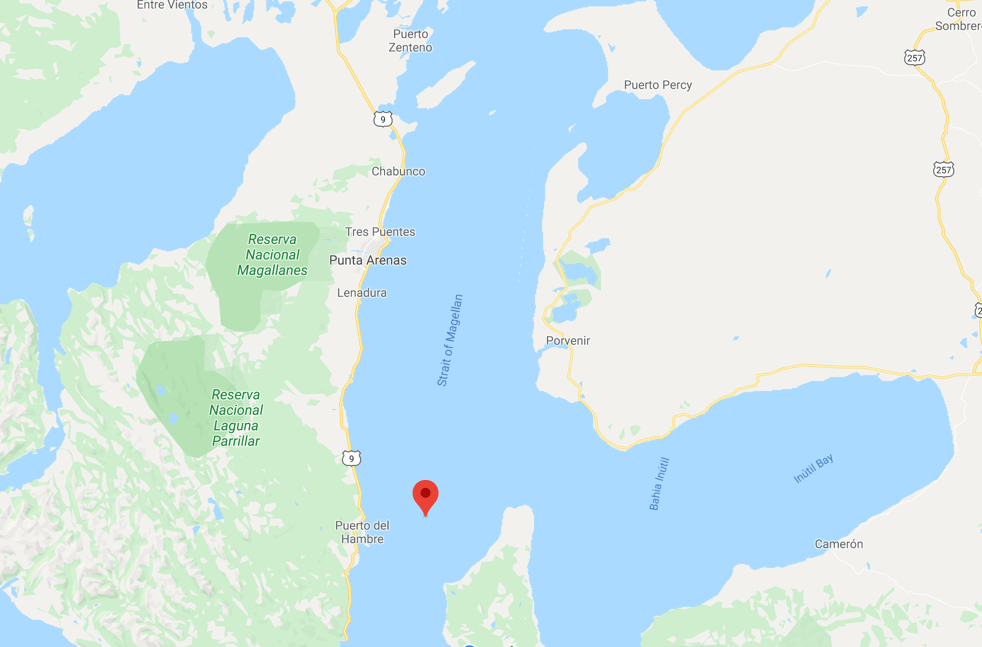
The Strait of Magellan is a 350-mile (570 km) channel located at the southern tip of South America, connecting the Atlantic Ocean and the Pacific Ocean.
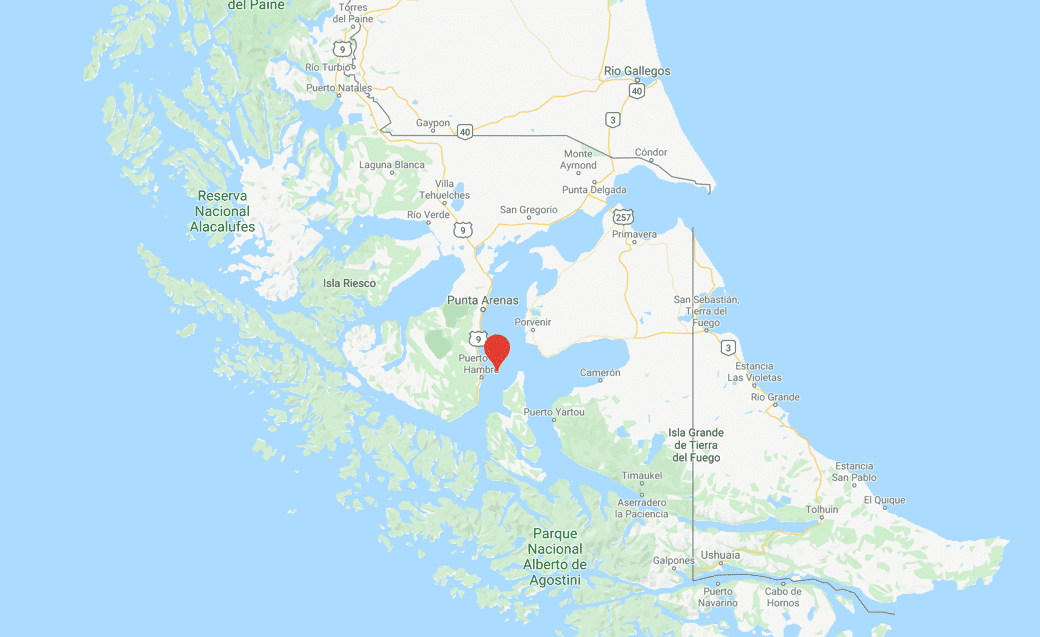
Named after Ferdinand Magellan, the Portuguese explorer who discovered the strait in 1520, the Magellan Strait separates the southernmost end of the Americas and Tierra del Fuego Island. Most of the strait is lying within the territorial waters of Chilean, while its easternmost extremity touches Argentina.
The narrowest and widest points of the passage are 1.9 and 22 miles (3 to 35 kms) respectively. An important natural passage in the region, the strait, from the Atlantic, extends westward between Capes of Vírgenes and Espíritu Santo and then moves southwestward before turning northwest at Froward Cape on the southern tip of Brunswick Peninsula.
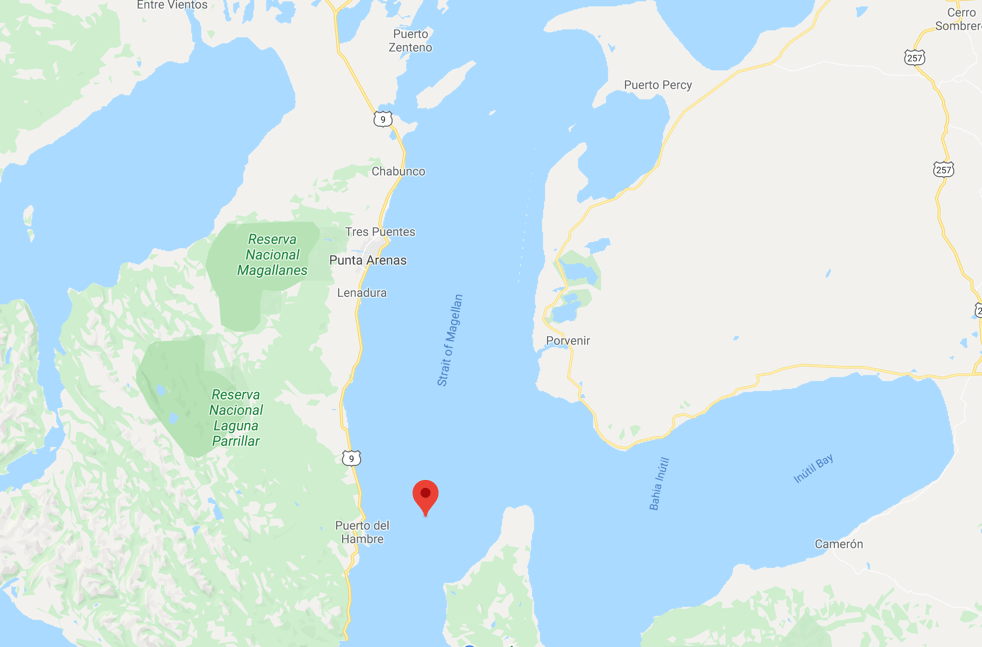
The strait finally connects with the Pacific Ocean after crossing Cape Pillar on Desolación Island. The major port of the Magellan Strait is Punta Arenas on the Brunswick Peninsula.
Before the opening of the Panama Canal in 1914, the Strait of Magellan was an important route for the steam ships moving between the Atlantic and Pacific Oceans.
Despite the difficulty to navigate through the strait, vessels preferred the route since it was shorter and safer than the infamous Drake Passage, which separates Cape Horn and South Shetland Islands of Antarctica. At present, it is estimated that around 1,500 ships pass through the Strait every year.

Image Credits: Wikipedia
Interesting facts about the Strait of Magellan
Here are some other interesting facts about the Strait of Magellan.
Initial Voyage along the Strait – The Magellan’s expedition
Although the strait has been inhabited by indigenous Americans for centuries and Europeans were aware of the existence of this natural strait since the 16th century, for the first time a fleet of vessels have crossed the strait as part of Magellan’s expedition. Magellan founded and passed through strait while he was searching for a short and easier route to the Spice Islands.
Magellan’s fleet took thirty-eight days to sail through the strait as they had to search for a route through the network of channels in the strait. However, Magellan crossed the strait for the first time in 1520, the strait and its coasts were explored in detail by British survey vessel HMS Adventure in the 1820s.
Later, it was only in 1840 the strait was used by a steamship, operated by the Pacific Steam Navigation Company, for commercial traffic.
A Challenging Passage
The Strait of Magellan is considered to be one of the most difficult routes to navigate in the world because of the narrowness of the natural passage and the unpredictable tidal currents and winds experienced along the route. Thus, though shorter and safer than the Drake Passage around Cape Horn, this curvy navigable channel also features notoriously turbulent waters often hurdled by sea ice and icebergs.
In addition, the ships have to manoeuvre confusing, often foggy, route that runs through a number of islands and channels. This difficulty to navigate through inhospitable conditions makes maritime piloting compulsory for vessels passing through the strait.

Image Credits: Jacques Descloitres, Wikipedia
Decline of fortune after the Panama Canal opening
As mentioned, the Strait of Magellan was one of the significant and busiest sailing-ship routes in the world for centuries. However, the opening of the Panama Canal, the artificial waterway that links the Atlantic and the Pacific Oceans, in 1914 reduced the importance of the strait in the maritime map of the world. The 82 km (51 mi) – long Panama Canal that cuts across the Isthmus of Panama has eased the voyage for ships as it greatly reduces the distance and saves money for the ship owners.
But for the Strait of Magellan, the opening of the Panama Canal meant ships finding a safer way to move between the Atlantic and Pacific Oceans.
However, the strait still holds its pride since vessels that can’t fit through the Panama Canal choose its waters to move between these Oceans. Also, the Strait also witnesses the arrival of about 50 cruises every year as this waterway has become one of the major tourist destinations for cruisers.
First Modern Warship in the Strait

Image Credits: Wikipedia
Since the maiden passage of a vessel through its waters on November 1, 1520, the Strait of Magellan must have witnessed the presence of several warships over the years. However, the first nuclear-powered aircraft carrier to transit the Strait was US Navy’s USS Ronald Reagan.
The 1,092-ft long USS Ronald Reagan became the first modern warship to enter the waterway in June 2004 on the way to its new homeport in San Diego. The Nimitz-class aircraft carrier is also one of the biggest vessels to cross the strait, leading the way for several other aircraft carriers of US Navy later.
The Lighthouses of the Strait of Magellan
It’s no secret that, despite the difficulties to navigate, hundreds of thousands of ships have sailed through the Strait of Magellan. And indeed, due to the geographical hurdles, the strait offers to the sailors, this curvy channel features a number of light houses on several locations to help maritime pilots as a navigational aid.
These light houses, before the arrival of electronic navigational systems, have guided mariners who sailed their ships through the waters of the Strait of Magellan. According to the National Geospatial-Intelligence Agency, there are 41 lighthouses standing-tall along the 570 km-long Strait of Magellan.
It is assessed that some of these lighthouses are centuries old and some are declared as national monuments. Among these historic monuments include the San Isidro lighthouse, the Evangelistas Lighthouse and the County of Peebles hulk etc.
Over to you..
Do you know any other interesting facts about the Strait of Magellan?
Let’s know in the comments below.
Disclaimer: The authors’ views expressed in this article do not necessarily reflect the views of Marine-Salvage. Data and charts, if used, in the article have been sourced from available information and have not been authenticated by any statutory authority. The author and Marine-Salvage do not claim it to be accurate nor accept any responsibility for the same. The views constitute only the opinions and do not constitute any guidelines or recommendation on any course of action to be followed by the reader.
The article or images cannot be reproduced, copied, shared or used in any form without the permission of the author and Marine-Salvage.